Plays-like distances
Jun 9, 2026
The number on the rangefinder is rarely the number you should hit. A 150 to the pin can play 165 uphill into a cold headwind, or 138 downhill with the breeze at your back. Squabbit now does that math for you and shows how far your shot actually plays, not just the raw distance to the target.
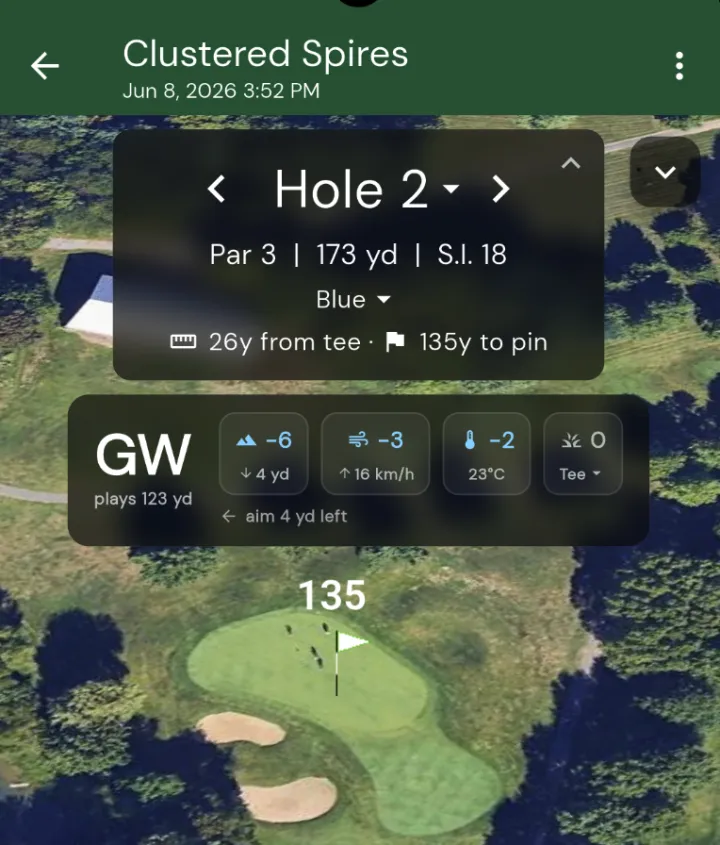
Every factor that matters, accounted for
Elevation is the big one. Shots that play uphill carry less and play longer, while downhill shots play shorter. Squabbit reads the elevation change between you and your target and adjusts the distance accordingly.
Then there's the weather, pulled from live conditions for your course. Wind can swing a shot by a club or more, so Squabbit factors in its speed and direction. Temperature and air density matter too: the ball flies further on a warm day at altitude than it does in cold, heavy air at sea level. All of it folds into the plays-like number.
Finally, your lie. A clean fairway lie behaves very differently from a flyer out of the rough, and Squabbit takes that into account when working out how the shot will actually play.
From a number to a club
Knowing a shot plays 165 is only half the story. Once Squabbit has the plays-like distance, it looks at the clubs in your bag and recommends the one that fits. Set up your bag once and let Squabbit do the picking, so you can step up to the ball already knowing what to pull.
See exactly what's driving the number
Squabbit does not just hand you a figure and ask you to trust it. Tap into any factor (elevation, wind, air, or lie) and you'll see precisely how many yards or metres each one is adding or subtracting. It's a great way to learn how conditions affect your game, and to sanity-check the recommendation before you commit to the swing.
You can also choose your preferred wind units, so the breakdown reads in whatever feels natural to you.
Open up a shot on your next round and let Squabbit tell you how far it really plays.